
When asked, our guests often tell us that what they love about staying at Twin Peak Tiny is the amazing views, the isolation, watching the sunsets, and being surrounded by wallabies and kangaroos. However, on the occasions when botanists and ecologists have visited the property, they often say, that for them, one of the main highlights about the property is, wait for it, the native grasses. So, what is it about Australia’s native grasses that is so amazing, and are they overlooked? When you start to look deeper, the answer would most definitely be yes.
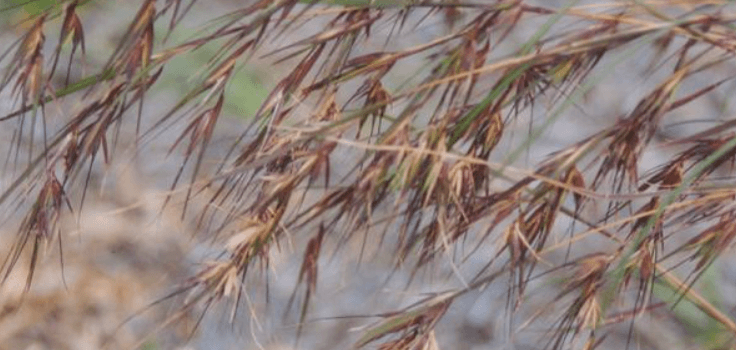
Photo by Kevin Sparrow
When it comes to restoring and protecting our riparian zones, hillsides, and coastal bushlands, native grasses have a huge advantage over their exotic cousins. While exotic grasses were often introduced for pasture or quick erosion control, they rarely match the long-term ecological benefits of our hardy, local species. Native grasses such as Kangaroo Grass (Themeda triandra), Wallaby Grass (Rytidosperma spp.), and Weeping Grass (Microlaena stipoides) develop deep, fibrous root systems that bind the soil and reduce erosion, improve water infiltration, and slow surface runoff. In contrast, many exotic grasses (e.g. Kikuyu or Phalaris) have shallow or matting roots that may provide short-term cover but are less effective at stabilising deep soils. Additionally, our native grasses provide food and shelter for our native insects, reptiles, birds, and small mammals. However, dense, moist Kikuyu mats can become havens for pests such as mosquitoes, rats, and invasive insects, especially in poorly managed areas. In a previous blog post, we explored the importance of fungi networks, and it is our native grasses that help build fungi biodiversity, hence promoting healthy soil. Furthermore, native grasses host our all-important pollinators and beneficial insects essential for nearby native vegetation. This vital workforce of native insects and fungi is often excluded from landscapes comprising mainly of exotic grasses.
Perhaps one of the most overlooked advantages to native grasses are their nutritional value for our livestock and, subsequently, ourselves. Kangaroo Grass, for instance, which once dominated many natural pastures across much of eastern Australia, is rich in digestible fibre. This is ideal for ruminants like cattle and sheep, especially given its high protein levels. It also helps livestock avoid metabolic disorders that are a consequence to high-nitrate or high-sugar levels found in exotic grasses. Most importantly, because Kangaroo Grass is deep-rooted, during dry seasons, it often remains green while the exotic grasses are dying off, making it a valuable drought reserve feed.
So, if native grasses are so good for our livestock, are they also good for humans? For thousands of years, traditional Aboriginal communities have used seeds from plants such as Kangaroo Grass as food, creating nutritious flour to make cakes or damper-like bread. These same flours are now available from ‘Black Duck Foods’ and, according to recent CSIRO research, when compared to whole wheat, native grass flours have greater levels of protein and amino acids. Bushtucker sources reveal that native flours are rich in dietary fibre, has a low GI and is gluten-free, making them an excellent choice for gut health and blood sugar control. Other research has shown that native flours include strong levels of essential micronutrients such as Magnesium, Iron and Potassium that, due to reduced topsoil health, can often be lacking in our traditional diets. This begs the question, could produce made from the Australian native grasses be the next generation of superfoods?
Finally, due to the increased consequences of ‘climate change’ we cannot ignore the added danger posed by exotic grasses such as Kikuyu. Unlike most native grasses, in times of drought, exotic grasses such as, Kikuyu, dry out, leaving hidden mats of dead thatch. These mats can act as a wick, carrying fire across landscapes — even when the top growth appears green. Furthermore, their underground runners (rhizomes) also burn, causing fires to smoulder beneath the surface, reigniting later or flaring up in unexpected areas. Once Kikuyu takes hold, it creates a monoculture, reducing plant diversity and forming uniform fuel loads, leading to a fire-weed cycle. So, for a safer and more sustainable environment, we need to encourage native grasses over exotics.
So even if guests do not always note the native grasses surrounding Twin Peak Tiny, we are extremely grateful for their existence and will do everything we can to help them multiply. This will include reducing slashing, especially during seed-setting times, which is usually late spring to early summer. We will also ensure bare ground is covered to limit weeds and encourage the fungi that native grasses need for the uptake of nutrients and water.
N.B. To find out more about foods produced from native grasses, you may wish to visit ‘Black Duck Foods’, which also provides Tiny Home accommodation.
You can also access Bruce Pascoe’s book ‘Black Duck A Year at Yumburra here
