
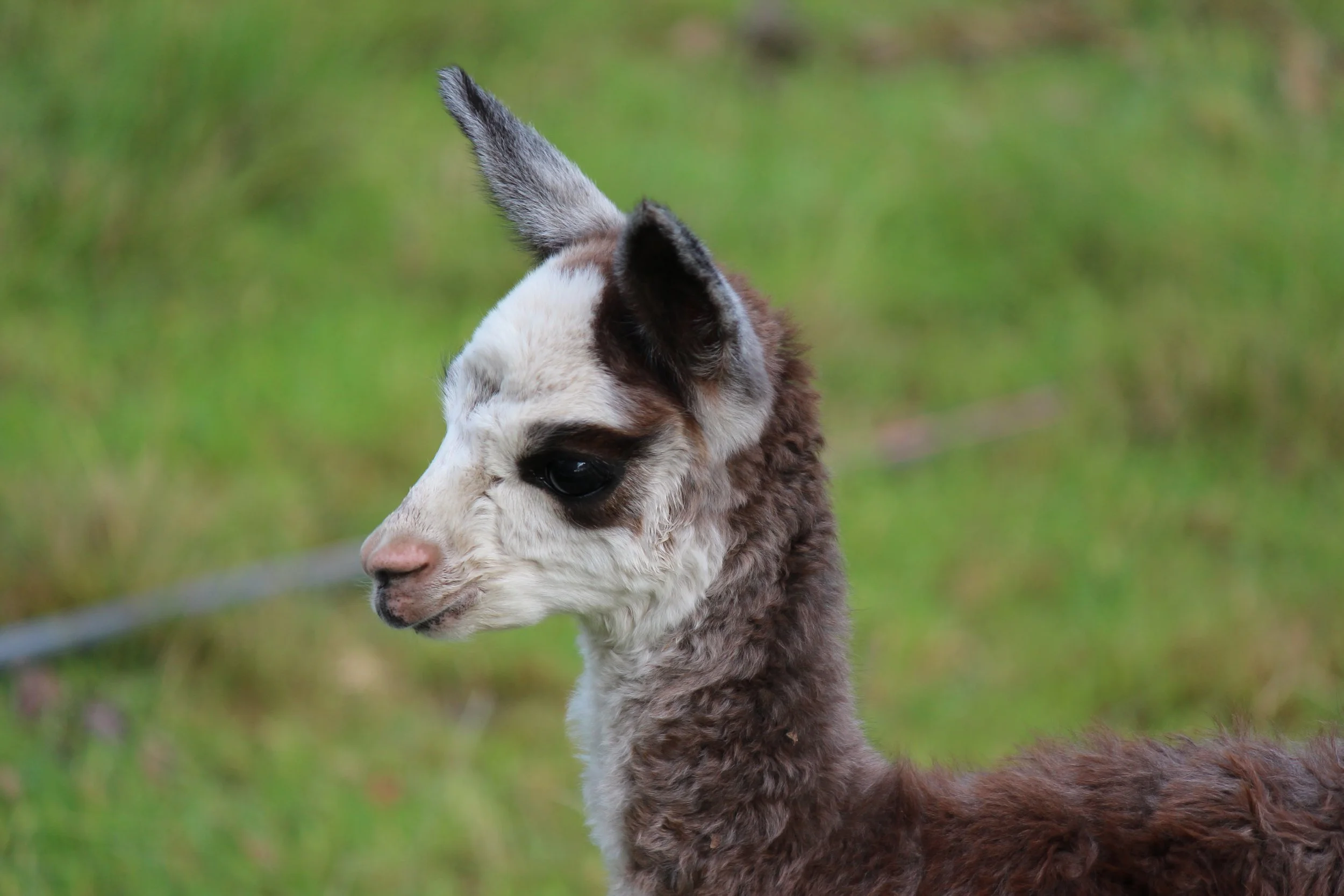
Our guests often tell us that one of the delights of staying at Twin Peak Tiny is being able to meet our 3 Alpacas. It is easy for them to bring a smile to your face. These cute, curious, and mischievous animals are full of personality; however, this is not the only reason we chose them. The benefits of keeping Alpacas reach far beyond entertainment. Alpacas offer solutions for protection, land management, and even climate issues
Alpacas originated high in the Andes Mountains of South America, where they have been domesticated for thousands of years by the Indigenous peoples in Peru, Bolivia, Chile, and Ecuador. They were bred from wild relatives of the camel family, mainly the Vicuña, and prized for their fine, soft fleece and their ability to thrive in harsh, dry, high-altitude environments. Alpacas first arrived in Australia in the mid-1800s, when early settlers tried importing South American livestock such as Llamas and Alpacas for wool and transport. These early attempts were short-lived mainly because the wool industry was already dominated by sheep, and long sea voyages made importing alpacas difficult. The modern Australian Alpaca industry began more than a century later, in the late 1980s, when breeders began importing Alpacas from Peru, Chile, and Bolivia, where they were quickly proven to be well-suited to Australian conditions.
Alpacas may look gentle, and they are, but they also make remarkably effective guardians for smaller animals, especially poultry such as chickens and ducks. Their strong herd instincts mean they are alert to movement, sound and sense of smell, and they quickly recognize when something doesn’t belong. On our property, the Alpacas often share the paddock near our chickens and ducks' area. If a fox, dog, or feral cat approaches, the Alpacas will raise an alarm call, a loud, high-pitched sound, that alerts both people and animals. They often move toward the threat, standing tall and facing the intruder. In many cases, their size, presence, and confidence are enough to scare predators away. However, it is not uncommon for Alpacas to use a combination of, stomping and physically attacking foxes to death. (In addition, we also use Guinea Fowl which are excellent at chasing off foxes, snakes and goannas)
When it comes to land management, Alpacas offer many benefits. Unlike sheep, goats, or cattle, Alpacas have soft, padded feet rather than hard hooves. This is particularly important for Australia’s ancient soils, which can suffer greatly if constantly trampled on. Additionally, Alpacas graze very differently from traditional livestock. Instead of pulling up plants by the roots, they snip the tops of grasses and herbs, leaving the root systems intact, allowing for quick regrowth. Over time, this grazing pattern encourages a dense mat of living roots, which helps prevent erosion and improves the soil’s ability to store carbon and moisture. This combination enables greater drought resilience vital for Australian landscapes as they are becoming increasingly challenged with the effects of a changing climate. A further benefit is derived from Alpaca manure, often called “Alpaca Gold”, which is a powerful soil conditioner. It’s low in ammonia and high in essential nutrients like nitrogen, phosphorus, and potassium, which Australian soils often lack. It also contains organic matter that feeds soil microbes, fungi, and beneficial bacteria. These microorganisms are the foundation of a healthy soil ecosystem: they decompose organic material, release nutrients for plants, and help build soil carbon. Because Alpaca manure breaks down easily and doesn’t need composting before use, it enriches the soil naturally, supporting strong plant and fungal growth without the need for chemical fertilizers.
Perhaps one of the greatest benefits of keeping Alpacas in often drought-stricken Australia is the limited amount they need to drink. Originating from a dry, high-altitude area where water is scarce, has meant Alpacas have evolved to use water efficiently. An adult Alpaca typically drinks only 2 to 4 litres of water per day, depending on the temperature, humidity, and moisture in their feed. In comparison, a sheep or goat might drink 6 to 10 litres, and cattle can need 55 litres or more per day (A milking cow can drink anywhere from 60 to 120 liters of water per day). It’s not only water use that makes Alpacas a highly sustainable option, but Alpacas are also remarkably efficient eaters and digesters. Their stomachs allow them to extract maximum nutrition and moisture from relatively small amounts of feed. This efficiency means they can live healthily on modest pasture and still maintain body condition, reducing pressure on grassland and water resources.
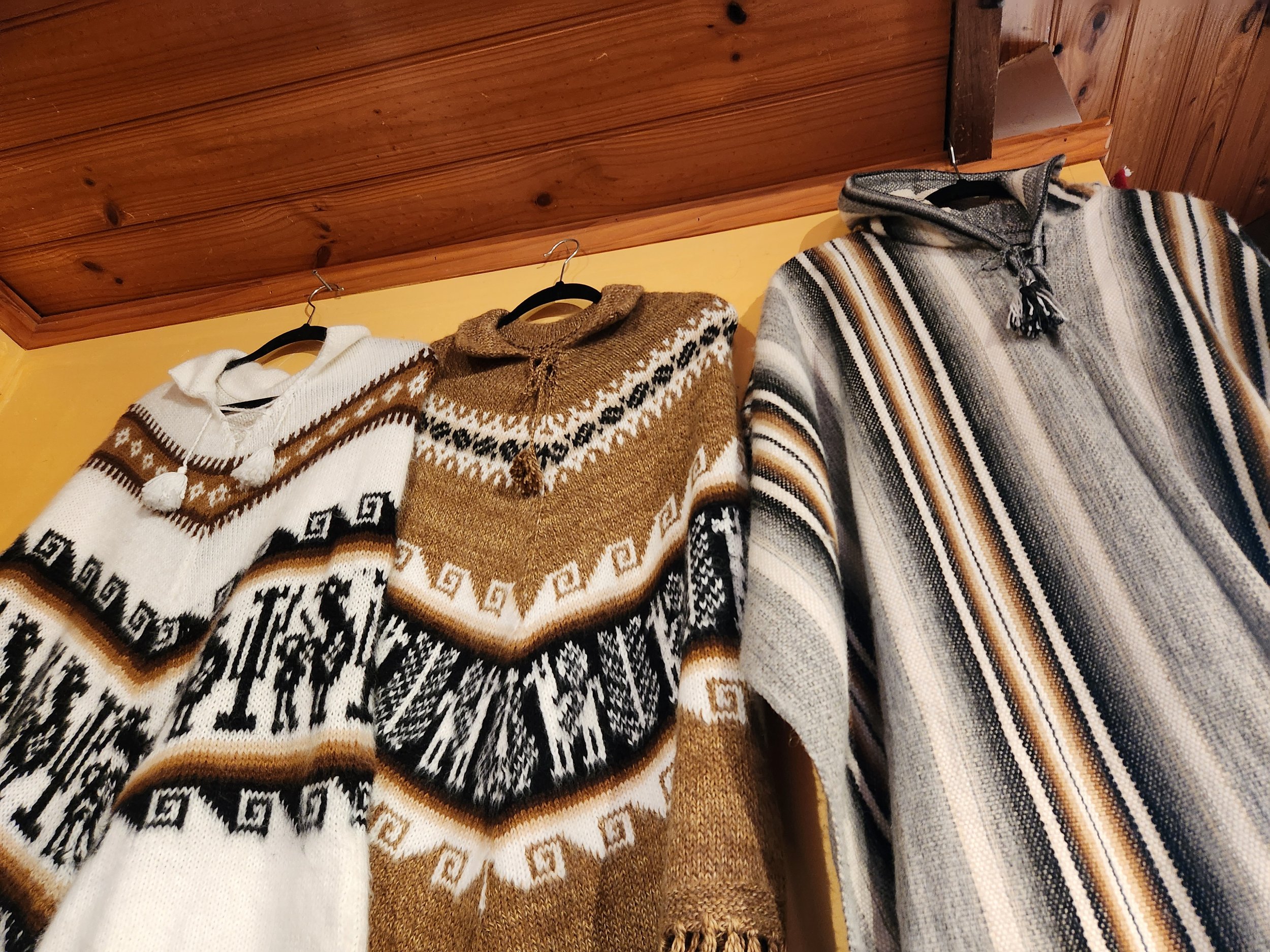
All of the above means that Alpaca wool is one of the most sustainable fabrics available. What's more, the wool is also beautiful. We are lucky here on the far south coast to have a number of people who work with Alpaca wool. One such person is Jenny Froud, long time Alpaca breeder and spinner who lives next door to Twin Peak Tiny. Jenny’s handiwork can often be found at The Cobargo Creators Centre.
Only a few kilometres away we are also lucky to have expert breeder and weaver Annemarie Ashton-Wyatt of Wedgetail Rise Alpacas, where you can purchase Alpaca wool. When needed, both Annemarie and Jenny have kindly shared their wealth of knowledge with us on our journey of being fledgling Alpaca owners. Finally, a number of imported Alpaca products can be purchased at Arcadia and Gulaga Gallery in Central Tilba